
In a remarkable display of community spirit and solidarity, KMIT UGM, under the leadership of the Aruna Adhibrata Cabinet for the 2024/2025 period, launched a social initiative entitled “KMIT Berbagi.” Organized by the Social and Community Affairs Division, this program aimed to share with those in need, particularly individuals living around Jalan Monjali and at Griya Yatim & Dhuafa Tamansiswa.
The KMIT Berbagi program consisted of several activities, including donation collection, distribution of iftar meals on the streets, and a communal iftar event at Griya Yatim & Dhuafa Tamansiswa. This initiative aligns with the Sustainable Development Goals (SDGs), particularly in promoting social equity and reducing poverty in developing countries.
On 21 March 2025, shortly before the time to break the fast, the Social and Community Affairs Division set out to distribute iftar meals to homeless individuals, workers, and others in need. Members of KMIT gathered at various points along Jalan Monjali, carrying boxes filled with carefully prepared meals. The atmosphere was filled with warmth and gratitude as the team interacted with recipients, sharing not only food but also smiles and words of encouragement.
The following day, on 22 March, the focus shifted to Griya Yatim & Dhuafa Tamansiswa, where KMIT organized a special event for the children and families residing there. KMIT delivered basic food supplies, including rice, cooking oil, and other essential necessities, to ensure that the families had sufficient provisions for the weeks ahead. This act of kindness demonstrated KMIT’s strong commitment to supporting vulnerable communities.
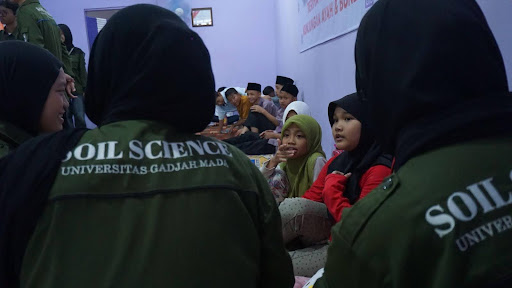
In addition to distributing food supplies, KMIT also held a communal iftar at Griya Yatim & Dhuafa Tamansiswa. The children and their caregivers were invited to break the fast together, fostering a sense of togetherness and belonging. This event was not merely about sharing meals, but also about creating lasting memories and strengthening bonds among participants.
To add an element of joy and entertainment, KMIT organized games and activities for the children. Laughter filled the air as the children enthusiastically participated, showcasing their talents and creativity. Prizes were awarded to the winners, ensuring that everyone went home with smiles and a sense of achievement.
KMIT Berbagi was more than just a charitable initiative; it reflected the spirit of compassion and solidarity that is essential for building resilient communities. Through such activities, KMIT UGM not only addressed immediate needs but also contributed to the long-term goals of sustainable development in the region.
The success of this program highlights the importance of community engagement in addressing social issues. It serves as a reminder that collective efforts can create a significant impact, especially in developing countries where resources are often limited. KMIT’s initiative encourages other organizations and individuals to take similar actions, fostering a culture of giving and mutual support.
In conclusion, KMIT Berbagi stands as an exemplary model of how student organizations can play a vital role in uplifting their communities. By focusing on the needs of vulnerable groups, KMIT UGM has made meaningful progress toward achieving the Sustainable Development Goals, proving that together, we can create a better future for all. This program also contributes to SDG 1 (No Poverty), SDG 2 (Zero Hunger), SDG 3 (Good Health and Well-Being), SDG 4 (Quality Education), SDG 6 (Clean Water and Sanitation), SDG 7 (Affordable and Clean Energy), SDG 10 (Reduced Inequalities), SDG 11 (Sustainable Cities and Communities), SDG 12 (Responsible Consumption and Production), SDG 16 (Peace, Justice, and Strong Institutions), and SDG 17 (Partnerships for the Goals).
Written by: Alvian Tegar Wiranda